Rainy Season
The Narrow Road to the Deep NorthThe Rainy Season is a turning point in the construction of the Death Railway: conditions that had been harsh but initially manageable gave way to intensified labor and worsening privation. In the novel, the monsoon is both a practical force that obstructs railway construction and part of a wider escalation in which the Japanese timetable presses harder on prisoners already short of food, tools, and medicine.
From dry-season plans to monsoon labor
When Dorrigo Evans and the prisoners reached Siam in early 1943, the dry-season jungle was open and dusty. Food was scarce, but starvation had not yet taken hold, and the work, though hard, had not reached its later intensity. Imperial Japanese Army engineers had marked the intended route with surveyors’ pegs: a planned 415-kilometre railway running from north of Bangkok toward Burma. The prisoners’ first assignment was to clear a kilometre of giant teak trees using blunt axes and rotten hemp rope.
The railway’s urgency came from Japan’s military position. The Japanese Empire needed a land route to supply its forces in Burma, but lacked the money, machinery, and time for conventional construction. The project therefore depended on forced labor on a vast scale. Of the 22,000 Australian prisoners of war, 9,000 would be sent to work on the railway; they were among the many Asian and European laborers compelled to build it.
As the monsoon arrived, the trees leafed over and obscured the sky, while the rain changed the character of the work. The Speedo brought the end of rest days, rising quotas, and longer shifts, sometimes requiring prisoners to work both day and night. It also blurred the already precarious distinction between those considered fit for work and those who were sick or dying. The season thus coincided with a new labor regime: the railway’s deadlines became more demanding just as the prisoners’ capacity to meet them diminished.
Flooding, shortages, and command
The rains made an already strained supply system less workable. In the account of the railway command, the river was high, fast, and dangerous for moving heavy loads upriver; the road was mostly impassable, and supplies had dwindled. The workforce was insufficient, and many of the remaining prisoners were ill. Cholera had arrived, while disposing of the dead also took men away from railway work. Railway Command Group nevertheless expected more progress.
The engineering demands continued to grow despite those constraints. A revised order required a major cutting, already half-completed, to be enlarged by a third to address gradient problems in the next sector. That change meant cutting and removing a further 3,000 cubic metres of rock. Prisoners were doing the work by hand with hammers and chisels, and the camp lacked adequate tools and fuel to sharpen them. The order makes visible the distance between the railway’s technical demands and the material conditions under which the work was imposed.
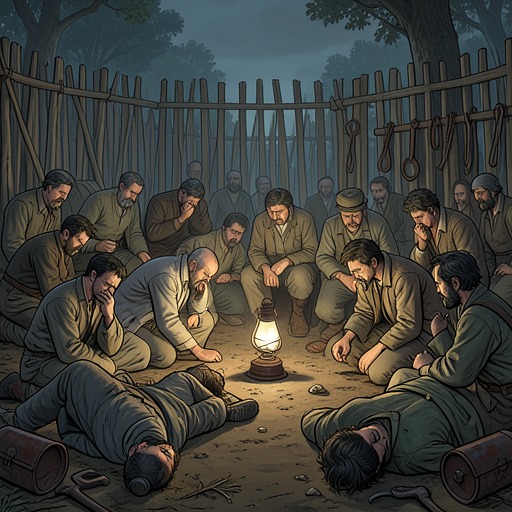
At the prisoners’ camp, the worsening conditions also altered who carried responsibility. Colonel Rexroth died of dysentery, and Dorrigo Evans assumed command. He arranged a levy on the officers’ pay to buy food and drugs for the sick and pressed the officers to work. The men called him Colonel to his face and the Big Fella elsewhere, a role shaped by their need for a leader as well as by his actions. Meanwhile, occasional duck eggs, palm sugar, repeated jokes, and the prisoners’ continuing sense of belonging to Evans’ J Force helped sustain their collective identity amid loss.
The season’s legacy
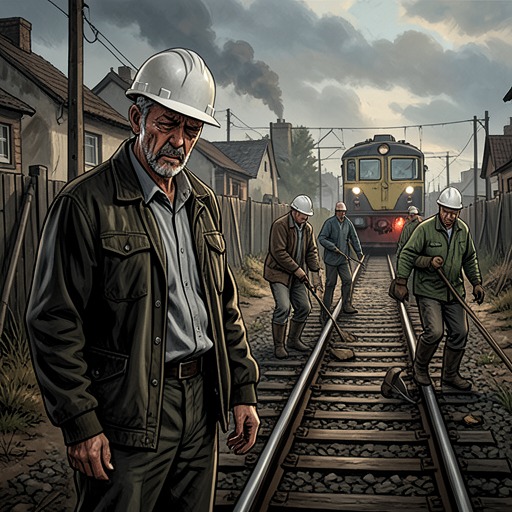
The monsoon did not itself account for the railway’s death toll, but it formed part of the conditions under which forced labor intensified and disease and shortages worsened. When the railway was completed on 25 October 1943, the first train, C 5631, passed the remains of those who had died building it. The number of deaths among the railway’s laborers was never settled: Allied prisoners were only a fraction of the workforce, alongside hundreds of thousands of Asian laborers, and estimates for the latter’s deaths varied widely.
After the war, the railway lost its military purpose and support. The Thais abandoned it, the English dismantled it, and local people pulled up and sold sections. Rain and sun continued to act on the route: embankments and bridges washed away, cuttings filled in, and vegetation grew among the remnants of the railway and the mass graves. The Rainy Season therefore belongs to two linked changes in the novel: first, the weather becomes part of the pressure under which the railway is built; later, the returning natural world helps undo the line that imperial ambition had forced through the landscape.